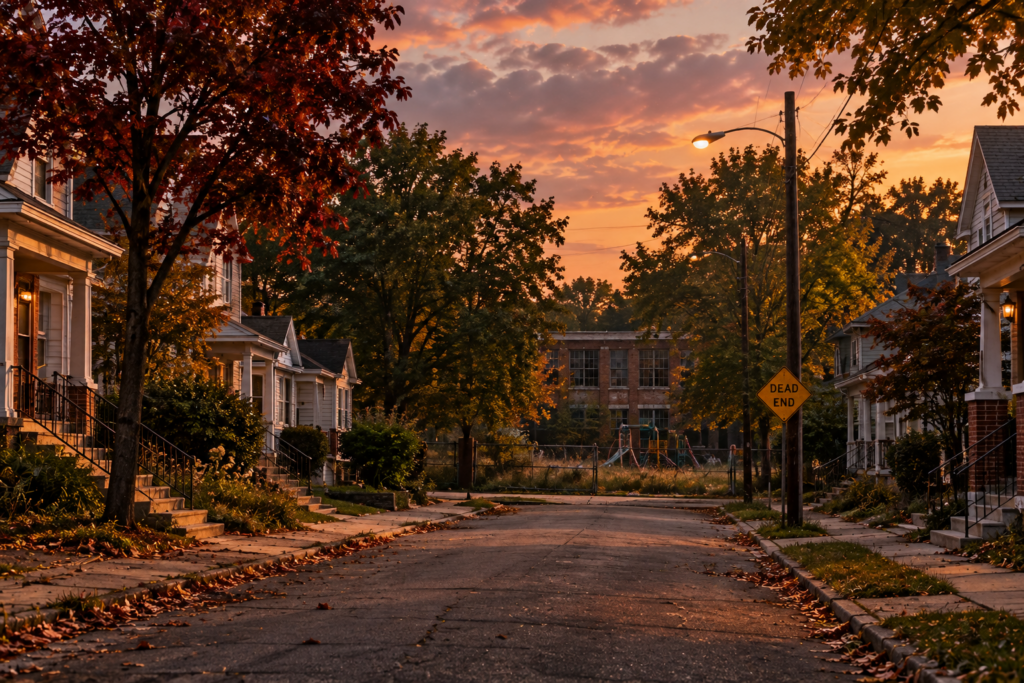

The Storm of Quiet
I walk into the Core Care Center, going into my half of the year check up. I stride to the desk and eye the desk lady. I link with her chip and share my name, date of birth and sex. Glancing her over, she’s pretty plain, no outstanding jewelry and her outfit is fit for one of a working woman. I mean, that’s clearly the life she lives, the life we all work for just out of reach for her.
She gazes at my smartwatch, darting to my neck and ears seeing the latest collection from Sorelli and Co, adorned with diamonds mined from the most premium volcanic pipes.
“Date of birth, 09/16, 2053. Head to the right, door 118.”
I walk ahead and get situated in my room. This is not the first of my procedures. In fact, I have done two of these appointments a year since I was born, totalling 40 times. It is a quick procedure, take your micro chip, study it, complete it and then you’re done. At least that’s what it looks like to me. I feel the same, if not even better, afterwards. The faster this is done, the faster I can get back to editing my videos. My followers cling to my posts like lifelines—my presence means everything to them. My community, reminding me of how far I’ve come and where I could’ve been. I started off with no following, a nobody on Vizzi. The more I posted my upcomings and success the more people commented and liked my posts, hoping to reach my status and luxury.
“Oh my gosh, where’d you get that?”
“I wanted that, but I couldn’t get it, of course you got your hands on it.”
“You always have the nicest stuff, can you share some of those links?”
“You’re so aesthetic.”
“I hope to get to your level someday.”
“How do you always afford to get the nicest things?”
Of course, I never respond to these comments, there’s not much to say. They can see the disparity. I push them to work even harder, so their lives can model mine.
The doctor comes in and I lay back on the hard table covered with thin paper. A hologram screen appears in front of him with my information. He looks at me for a bit, his eyes connecting with mine and slowly blinks. He turns his head with a flick of his eyes. His fingers move in the air, not quite connecting with the screen, yet I sense ever so slight changes in my thoughts. My mind, already eager to end this process, goes back to my videos, the impending success looming in my thoughts. I wonder what everyone else will think of my new Velo. Not only does it take off at 150 mph in 2 seconds, but it now has synth-link drive, the aero vehicle connecting with my thoughts. I was just approved yesterday and didn’t even have to clock in at a job to get it!
I look over at the doctor, his fingers still hovering over the screen. I wonder what videos I can make next. I do have an order of clothes coming in, a new line dropped and it literally sold out in seconds but fortunately I was able to get my hands on it. I bet the public would like that. And if they don’t, then clearly it’s still beyond them. The doctor starts to point his finger repeatedly, jabbing at the air. I can’t feel bad for people who don’t have the things I do, my possessions make me the person I am. Is that not the whole point of living?
The room seems to pause, as if listening—then the screen blinks out.
The doctor freezes, hands suspended midair from the disturbance that made the hologram waver. A strange sensation flickers through my head—like a fly bouncing from wall to wall. My ears begin to ring. The doctor is crouched now, hands clamped over his skull, shaking. What is happening?
His jaw clenched and he forces himself upright, still making those rapid, frantic hand movements—faster than ever. The lights fade in and out, the doctor’s figure slipping in and out of my sight. He looks up, hands trembling. Does he know what’s happening? From the panic twisting his gestures, I think he’s just as lost as I am.
His eyes flick toward me. Unlike our last attempt at eye contact, I can actually see him this time—pupils blown wide, movements sharp and hurried.
Then a surge runs through my link.
URGENT. Solar storm inbound. CME impact imminent. Prepare for technological failure. The words slam into my mind in a single pulse, clearer than any thought of my own.
The doctor moved even faster now, seeming to be almost done. Good, I need to get back home before this solar storm so I can upload my video. Then once everything is back up and running I can drop the video about the exclusive clothes order on the way. I lay back, waiting for the doctor to signal he’d completed the procedure. A few seconds slip by, and I jolt up. A dull thud snaps my attention over to the doctor, collapsed on the floor, the screen still suspended, glowing above him. What just happened? I look at the hologram, still only displaying my information. I crouch near the doctor. There’s not much to him at first glance—just a lab coat and worn black tennis shoes. Even his expensive glasses don’t distract me from the man beneath them. I reach for his link and feel nothing. So I reach for him, for his hand, and the warmth there makes me see the exhaustion in his eyes. He must have worked harder than his plain appearance ever suggested. I don’t know if there is anything I can do for him, I’ve never seen an unconscious person before, let alone helped them. Is there anyone else here who can?
Walking out of the room, I scan the area quickly. The desk lady is on the ground, eyes closed. The nurses, janitors, the patients waiting in the chairs, all unconscious. I walk up to the desk lady, plain just as before, yet soft. Hair fanned over her face, freckles peaking through, that I don’t think were there before. I try the link again.
Nothing. No signal, no communication, just silence. I try to reach out to any others that might be in the building, yet again silence.
I look back at the desk lady, my stomach squeezing. I don’t know what to do. I start to open my mouth, my lips parting ever so slightly, but close my mouth again. We didn’t talk before, never needed to, and I guess we don’t need to now, not like she can respond anyway. I turn away from her, my eyes lingering on her body before tearing them away. Should I just leave these people here?
I walk back into the hallway, scanning the other doors. I’ve got to see for myself. I put my hand on the door, the cold metal tingling through my palm and decided to open it. It opens inch by inch, revealing the doctor on the floor, shriveled in a ball. No different from my room. Where is the patient? Was there a patient here to begin with? How many people were getting their procedures done today? Are they okay? A thought that never crossed my mind before. Are they okay? My brain feels fuzzy and my heart beats a rhythm I’m unfamiliar with. I rush through the halls. 120, 121, 122, 123, 124. Some rooms are completely empty, no patient or doctor. Others are occupied by just the doctor. Limbs sprawled on the floor. My chest tightens in a way I’ve never felt. It makes me want to move—forward, away, anywhere else. My feet take me toward the hallway before I fully understand why. I run. Run straight out the door, away from those people, away from the Core Care Center.
The sky doesn’t look like a sky anymore. It’s as if someone peeled it open and let colors bleed through—colors that shouldn’t exist above me. Streaks of green and violet twist together like they’re alive, pulsing across the atmosphere in slow, trembling waves. A deep red glow hangs over everything, tinting the buildings, the doctor’s coat, even my own hands. I’ve never seen the sky look so pretty. I wish I could have recorded this for my followers –though the thought feels distant, less urgent than the awe itself. I wonder if they are seeing this right now.
A sharp movement catches my eye and I force my gaze away from the sky. There is a girl, looks a little older than me. Her attire is not horrendous but it isn’t eye-catching. Shoes worn down from wear and clothes slightly too big for her frame, hanging around her delicate build. But what catches my interest is her alluring features, face framed by gentle curves rather than chiseled and her eyes… a quiet green, warm and steady. As she looked over me, her eyes held no malice but I couldn’t miss the careful squinting at my belongings. Maybe a hint of jealousy? Not surprising. We live to attain the things I have, for most working their whole lives just for it to be unattainable. Still, something in me focuses more on her expression than her lack of valuables, which feels strange.
She strode up to me with a strong, certain walk, one I couldn’t quite place, considering she had none of the status or luxury that usually justifies it. She drew in a quiet breath, her voice forming even before the sound reached me.
“You’re the only person I’ve seen since leaving Core Care. Everyone there was unconscious—or possibly dead. I couldn’t determine which.” Her voice wavered only once before steadying again, too practiced to be natural. Her voice faltered, then steadied, as if she was unfamiliar with the weight behind her own words. That weight being worry. “My doctor was just beginning my procedure when the solar storm hit and now I can’t feel the connection of my chip at all.”
She stalls, unsure if she wants to speak her next thought. “The quiet where the chip’s signal used to be leaves a strange pressure in me, a feeling I can’t classify or understand.”
That last part catches my attention as she’s feeling just what I’m feeling. The link is gone, our seamless communication cut off. But there’s something else I can’t feel anymore—something loud at the front of my mind, pushing me to chase.
She studies my face for a second longer than what feels normal, as if searching for something she’s not sure she’ll recognize. When she speaks again, her voice is steadier, but quieter too.
“Does it feel the same for you?” she asks. “The… silence? It’s like something should be there, pushing at me, but it’s not.”
“It feels different…” I admit before thinking. Should I be telling someone like her this? Not that she could fully understand, we come from different lifestyles. That feeling, that urge I would feel before actually fulfilled for me, my eyes flicker over her once more, a success she obviously hasn’t felt yet.
She nods slowly, almost relieved that I understand, though she tries to hide it. “I thought it was just me,” she says. “I thought maybe the storm only damaged my chip.”
“I don’t think it’s just you.” My throat tightens unexpectedly. “I can’t feel anything from my chip. Not the link, or the urge.” The confession feels strange, one that feels illegal to leave my tongue. Her eyes flick away for a moment, not out of dismissal but hesitation — like she’s choosing her words with new care. “I keep expecting the old urges, but feelings I’ve never experienced continue to surface.”
“Do you think it will come back?” I ask. Will my followers be worried?
“I don’t know.” she answers, watching the sky. “I think we should look for other survivors.”
I nod, thinking we should go back to the building. I was careless and missed her, so maybe there actually are other survivors.
“Let’s go back to Core Care. Maybe there are others like us.”
We start down the hallway together, our footsteps the only sound in the building. The lights flicker overhead, humming in rhythm with the sky outside. For a moment, neither of us speaks — maybe because we don’t know how to fill silence. Or be within the presence of one another. I’m not used to much interaction. In our world, connection wasn’t a pursuit; status was.
We pass room after room, empty or collapsed, until a faint groan bleeds into the quiet.
She hears it, too. Her green eyes flick toward me, steady, controlled, but something new passes through them — not fear, not urgency… something softer.
“Someone’s awake,” she whispers. We push open the door. A man sits slumped against the wall, breathing hard, blinking like the world is too bright. His coat is half torn, his badge dangling from one pocket. His eyes darted up at us.
We stand in the doorway as the older man blinks hard, trying to steady himself. His breath trembles, but not from fear. Something else. When he finally speaks again, it’s barely above a whisper.
“It wasn’t supposed to happen like this.”
The girl beside me stiffens. “The storm?”
He shakes his head slowly. “The chip.
I don’t know what to say. Our chips are no longer working, no synchronization, no communication, no urge. But the look in his eyes tells me it’s something more than just the lost connection.
He looks between us, his gaze lingering like he isn’t used to holding eye contact with anyone.
My mouth opens, but I’m not sure how to answer. The girl answers first, cautious:
“There’s a… pressure. A quiet. Something else beneath it.”
“You’re… feeling things you haven’t felt before, aren’t you?” he asks
The doctor manages a weak smile, the smallest sign of something he hasn’t let himself feel in years. “Whatever happens next,” he murmurs, “you’ll face it with more of yourselves than you’ve ever had. There’s… no returning to how things were. Not completely.” He scans our faces, holding my gaze for a moment too long. Uncertainty flickering before he forced himself to look forward. “There’s strength in staying together,” he murmurs, almost as if the words surprise him. “Connection was never the point,” he says quietly, eyes distant. “People only gathered to compare, to flaunt whatever they’d earned. No one wanted to know each other. They only wanted to be seen. But we need it now. Even if we’ve forgotten why.”
He pushes himself upright, unsteady but determined. “We should move. There may be more survivors.” We walk into the shifting light, the hallways green from the reflecting windows. We walk into uncertainty, into a world without the chip’s silence. “Whatever we were before this moment,” he looks up at the sky, alive with movement. Colors snap and pulse through it like electrical veins—bright ribbons of green twisting through violent reds. Every few seconds the whole sky flickers, as if deciding whether to hold together or collapse. “We won’t be again. The storm did more than damage our systems,” he says. “Whatever it woke in us… we can’t undo it now.”