
The Dead End
By A’dia Dickerson
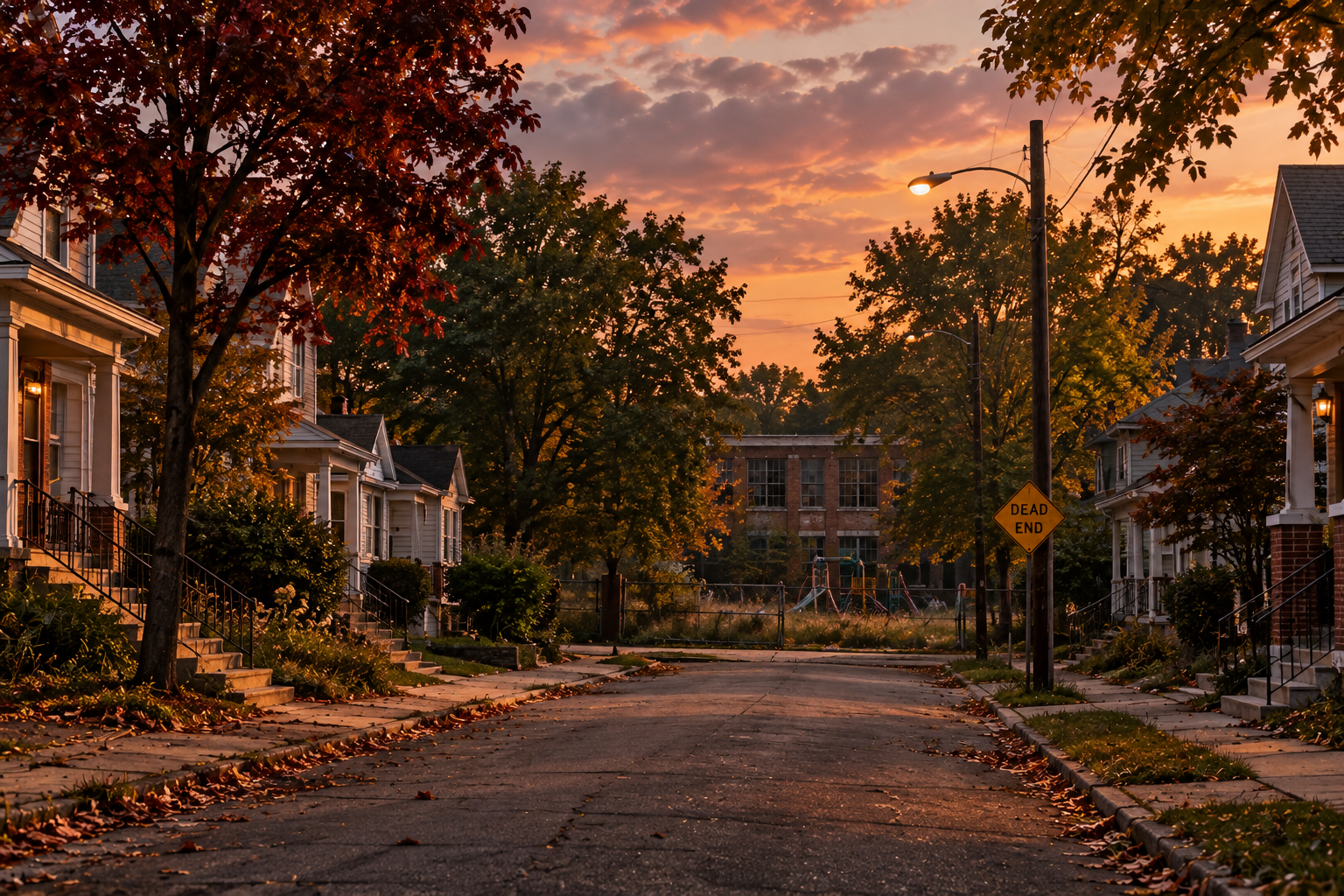
My neighborhood is full of colorful houses with distinct personalities. Not one house on my street in Darst looks the same. Throughout the turns of the street, each road and house alongside it has characteristics that distinguish themselves from their neighbors. Yet with every unparalleled house is a house adjacent that is related. Although the houses are unordinary, all the houses look like they belong in the neighborhood, like sisters. People walk their dogs down the many twists and turns, downhills and uphills of the neighborhood. Each turn takes the native down a street that has houses of different colors, sizes and floors, backyards and front yards, porches and residents. My street of Darst sits between two main roads to the north and south, yet it possesses smaller roads that shoulder off into streets forgotten by the cars that simply pass by on their way to the main road. South Maple is a choice made by the visitor, deciding whether to continue forward or turn to get to the main roads. While the dead end street on South Maple may deter wandering feet, looking past the abandoned school and rusting playground reveals a quiet place where forgotten spaces and persistent signs of life coexist.
Down the street of Darst, to the left there is a street by the name of North Maple. North Maple is the kind of street that attracts visitors effortlessly with every house opening its doors to the people who wander by its feet, leaning towards the sidewalk looking for company.
Many neighbors have walked their dogs down this street as poop littered many of the neighbors yards. The sidewalks are worn down from years of footsteps, their cracks and uneven edges evidence of its popularity. At the beginning of North Maple on the left side there is a white house with an unfinished white picket fence. The house mirrors the street signs with burgundy mixed with brown hues painting the shutters around the house. This house’s yard is always green and low cut, as if the lawnmower eats down the grass every Sunday. The second house grows a garden, home to many types of flowers and bushes while protecting the gnomes and garden animals living in the yard. In the summer the sun shines down on this ecosystem of a yard, growing a swarm of pink, orange and blue with sweet nectar for the bees to feast on. The next three homes are like fraternal triplets. Their yellow hues and similar silhouette boast to the road that although comparable, they harbor a specialty of their own. The first home has a cantilevered bump out with three windows that let way for sunlight. The second sister has reddish brown bricks along its foundation. The third triplet is bigger than its sisters and proudly presents a large front porch bald of any furniture as if scared the furniture will taint it, yet the sidewalk cracks from the pressure of visitors, the porch unsuccessful of baring its teeth. The next house has a pigment of forest green with a wide berth of an opening. The porch is supported by columns adjoined with hanging flowers and two chairs where pink pillows sit prettily on top. There are even two town homes down this street, like little cousins to the rest of North Maple. This street has been visited time and time again by people wanting to enjoy their neighborhoods. Families stroll with children in tow, couples amble past with dogs straining at their leashes, and kids weave their bikes through the crisp fall air — all of them choosing North Maple without a second thought. Though its sister, South Maple, continuing straight from North Maple doesn’t receive half of the exposure as she does. Overshadowed by its older sister, South Maple is just waiting to exhibit its personality.
South Maple is an extension of its sister, yet different. To continue down this path is a choice. There are two other directions as the street splits into a four way intersection. Straight down South Maple, continuing down the dead end, right down South Church Street leading to the main road, or left up North Church Street back up the road and further into the neighborhood. Due to this design, South Maple receives little foot traffic, as signs with “one way” warnings make the visitors hesitant. Unlike its sister, South Maple is undiscovered. Stepping down its concrete path feels like stepping into a world, outshined by the attention its older sister receives, a place patiently waiting to be discovered and explored.
Beginning on the street is a building, sagging from the pressure of being vacant. The rows of windows stare out toward the street, displaying posters and handouts that were once read by a child looking outside willing class to be over. The elementary school was forgotten by its developers, deteriorating as the paint chips rotted away on the corner. As if hopeful, a big Hilliker for sale signs parades the yard, desiring laughter to fill the halls once more.
All of the houses down South Maple are white, with accent colors that clothe the shutters and the doors. Every single house has a porch, some screened in, others with just a few square feet of room but a chair adorns every entryway, inviting visitors to the street that never come. The cars park on the street, although they have driveways and a garage to house their cars, as if the natives know there won’t be much traffic down this street. Throughout the street there are signs that warn people, conveying “one way,”, “dead end,” and “no parking” signs almost like the street embraces its secrecy. Down this street a little ways from the beginning is a house that does not greet the others, facing towards a field with a park. This house is the largest on the street, but as if not to boast to its smaller neighbors, it shyly turns away, opting to observe the park instead.
The park is enclosed with a wire fence that does not look to have an entrance. The fence is uninviting, the gates closed and barred by trees and shrubs that have had the freedom to grow wildly, no one to maintain them. There are several basketball hoops that have nets that have been dissected from the frame and lines that no longer paint the concrete, leaving only faint traces of where they once divided the court. There are the remains of lines from games of four square where balls flew across the yard and hopscotch boxes where some numbers are lost. The swing set is crawling with rust from decades of supporting small children. The slides are waiting patiently, high above the ground as if daring a child to be brave enough to venture down their curvy path. A tetherball pole stands alone in the mulch, stripped of most of its parts with only a frayed string hanging from its side. The dead end would insinuate the park is not of use, especially with the abandoned school glaring over the park, yet there was an entrance. An entrance hidden from the eyes of bypassers as if only inviting the people daring enough to come closer, instead of dismissing it from afar. Near the overgrown shrub is a gate that screams when it opens, unused to having to use its joints. Yet littered across the yard are soda cans, paper french fry boxes, wrappers, and all types of paper sprinkled in the yard. The dead end does not save the park from the wrath of uncaring visitors.
Across from this park is the most extroverted house on South Maple. A white house with green accents and a red door joined by red steps. In the front of this house is a garden that takes a backseat to the little house that sits perched and waiting right at the edge of the yard. A little free library, ripe with knowledge, its shelves supporting the ideas of Animal Farm, The Hate U Give, 1984, and To Kill a Mockingbird. The books fill the shelves with few gaps between them, their tightly packed spines exposed to the road, waiting for the few people who dare to wander down this dead end to discover them. Although South Maple seems forgotten, it is there waiting to be discovered.
My street of Darst sits between two main roads, yet it possesses smaller roads that shoulder off into streets forgotten by cars that simply pass by on their way to the main road. South Maple is one of these streets. The dead end of South Maple deter people from going down this street before ever discovering what the street has to offer. The fermenting school and deserted park make the street seem forgotten and uninviting as if the street would just bore more disappointment. Yet, the homes that surround this street tell a different story. Their gardens still grow, chairs still stand proud on the porch, gates still unsealed and little libraries stocked with books waiting for the eager eyes of knowledge seekers at the very end of the street like a pot of gold waiting at the end of a rainbow.